

Earl Grey tea is much more than just a black tea. Its distinctive floral and citrusy aroma sets it apart. This unique signature is due to the essential oil extracted from bergamot peel, a citrus fruit steeped in Mediterranean sunshine. It is precisely this bold combination that has made it one of the most famous and beloved flavoured teas in the world, from the iconic British afternoon tea to the tea-break ritual in Parisian salons.
What is Earl Grey tea?
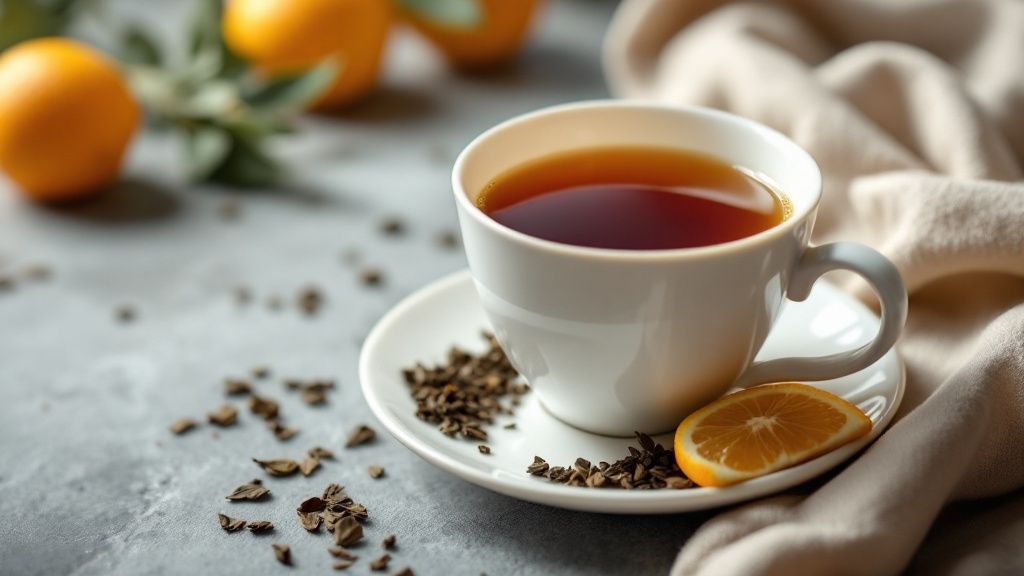
More than a beverage, Earl Grey tea is a true institution, a sensory experience celebrated for its timeless elegance. Its secret? A perfect balance between the robust character of black tea and the sparkling freshness of bergamot essence.
Imagine a base of robust black tea, often a blend of leaves from Ceylon (Sri Lanka) or Assam (India), chosen for their rich, malty flavors. It's against this backdrop that the magic of bergamot, a small yellow-green citrus fruit that thrives primarily in southern Italy, comes to work. It's the oil extracted from its peel that gives it its captivating and instantly recognizable scent.
A unique aromatic profile
Tasting Earl Grey tea is a surprising discovery of complexity. The first notes that rise to the nose are lively and citrusy, almost floral, evoking both orange and grapefruit.
This freshness is then counterbalanced by the depth of black tea, which adds a slight bitterness and woody notes to structure the whole. This combination creates a flavor profile that is both comforting and incredibly refreshing, which explains its immense popularity.
"Earl Grey tea is not just a fragrant tea, it's an invitation to travel. Each sip transports us to the sunny hills of Calabria, the birthplace of bergamot, while evoking the hushed atmosphere of British tea rooms."

ORGANIC EARL GREY: Assam black tea, natural bergamot flavour and cornflower petals.
Let's explore its fascinating origins, its health benefits, and the rituals surrounding it. You'll see that behind this simple cup of tea lies a whole world.
The legendary origins of Earl Grey
The history of Earl Grey tea is as rich and complex as its aromas. It takes us to the heart of 19th-century England, to a legend closely linked to a major political figure of the time.
The name of this iconic blend is a direct tribute to Charles Grey, the 2nd Earl Grey, who was British Prime Minister from 1830 to 1834. A particularly persistent anecdote in France tells of the recipe being given to him by a Chinese mandarin as a thank you for saving his son. A beautiful story, isn't it?
From myth to reality
Romantic as it may be, this version of events is probably more myth than reality. There is no record of the Count's trip to China in family archives, and flavoring tea with bergamot was not at all common in China at this time, when teas were more commonly flavored with flowers such as jasmine or osmanthus.
A much more pragmatic theory suggests that this tea originated in England. It was created either to mimic the taste of rare and very expensive Chinese teas, or, more simply, to mask the chalky taste of the water at the Greys' Northumberland residence.
"Whether it was a diplomatic gift or a clever local invention, Earl Grey tea has transcended its origins to become a true symbol of British elegance."
This 19th-century creation, initially reserved for the aristocracy, has since become a classic found in every corner of the globe. Its association with Earl Grey has given it a prestige that undoubtedly played a key role in its success, first in England and then throughout Europe. A staple of London tearooms, it has since conquered the world. Its journey is a perfect illustration of how a tradition can travel, adapt, and ultimately bring cultures together around a simple cup of tea.
Bergamot, the fragrant soul of Earl Grey

The secret to Earl Grey tea s unique aroma isn't found in the tea leaf itself. It's a unique citrus fruit: bergamot. This fruit, which resembles a small orange with thick, green skin, is the magic ingredient that gives the blend its soul and inimitable citrus notes.
It's not the kind of fruit you easily come across on market stalls. Bergamot, or Citrus bergamia by its scientific name, is cultivated almost exclusively for the precious essential oil extracted from its zest. Its aroma is so powerful and complex, halfway between bitter orange and lime, that it has become a mainstay of fine perfumery and, of course, the world of tea.
The sunny treasure of Calabria
Almost the entire world's bergamot production comes from a tiny corner of paradise. In fact, over 90% of this citrus fruit grows on a narrow coastal strip in Calabria, in southern Italy. The unique microclimate of this region, bathed in sunshine and caressed by the sea breeze, is simply perfect for the fruit to develop its full aromatic richness.
"The art of flavoring involves delicately blending bergamot oil with dried black tea leaves. It's a subtle process that requires true skill, ensuring each leaf is evenly scented without the aroma ever becoming overwhelming."
This crucial step is what transforms a good black tea into a refined and memorable tasting experience.
The quality of bergamot oil is therefore absolutely crucial. An exceptional Earl Grey is recognized by the purity and freshness of its fragrance, a direct testament to the excellence of the fruit from which it is derived. It is this perfect balance between the robustness of the tea and the liveliness of the citrus that makes all the difference.
More than a tea, an ally for your well-being
Behind its unmistakable aroma, Earl Grey tea hides many secrets. It's a true source of well-being, combining the strength of black tea with the sweetness of bergamot essential oil.
Black tea, which forms the basis of this blend, is naturally packed with antioxidants, including flavonoids. These valuable compounds, found in the Camellia sinensis plant, help our bodies defend against oxidative stress. Studies suggest that regular consumption helps support cardiovascular health.
The calming effect of bergamot
But the soul of Earl Grey is bergamot. And it's just as beneficial. Its citrus scent, both fresh and sparkling, is a star of aromatherapy for its relaxing properties. In Italy, its native land, its essence is diffused in homes to create an atmosphere of calm and serenity, a traditional practice for purifying the air and the mind.
"Enjoying a cup of Earl Grey is like treating yourself to a mini aromatherapy session. Just breathing in the fragrant vapors while drinking can help relieve stress and put a smile back on your face."
This perfect alchemy between the two ingredients offers us some advantages:
- A boost for digestion: in many cultures, black tea is drunk after meals to aid digestion. Bergamot, for its part, is used in traditional herbal medicine for its properties that soothe minor digestive discomforts.
- Clarity for the mind: the moderate caffeine in black tea, softened by the calming effects of bergamot, creates a state of tranquil concentration, without the jitters you can sometimes feel with coffee.
- A ritual for morale: in England, the afternoon Earl Grey break is a veritable institution. It's not just a pick-me-up; it's a suspended moment to refocus and calm the mind, a social ritual.
Mastering the art of the perfect brew
Preparing an Earl Grey is an art in itself, that of revealing the subtle balance between the depth of black tea and the freshness of citrus.
It all starts with the water. Choose the purest and most neutral water possible so as not to mask the tea's delicate aromas. Then, temperature is key. Forget boiling water, which attacks the leaves! Aim for 90°C instead. Water that's too hot will burn the bergamot's volatile notes and make your tea bitter. Too bad, right?
A matter of time and tradition
Infusion time is primarily a matter of personal taste. It is generally recommended to take between 3 to 5 minutes. Under 3 minutes, you'll get a light tea, dominated by bergamot. Beyond 5 minutes, the bitterness of the black tea will take over. It's up to you to find your perfect balance; aim for 4 minutes for a first taste and experiment from there.
Once the tea is brewed, a world of traditions opens up to you. The way you enjoy it is a true ritual that varies from one culture to another.
"Preparing an Earl Grey is a ritual, a pause that you allow yourself, adjusting every detail to your desires for a tailor-made pleasure."
Here are the three major schools that compete across the world:
- British style: probably the most famous method. A splash of cold milk is poured into the cup before adding the hot tea. The milk softens the astringency of the black tea, creating a rounded and comforting drink, the star of the essential afternoon tea.
- Continental style: In France or Italy, a thin slice of lemon is often preferred. Its acidity awakens and complements the citrus notes of the bergamot, for a more lively and refreshing taste.
- Plain, for purists: To truly capture the full complexity of the blend, many enjoy it without any additives. This is the best way to appreciate the subtle dialogue between the strength of the tea and the floral, zesty scent of bergamot.

Earl Grey: One tea, a thousand faces
Earl Grey tea is more than just a recipe; it's a blank canvas upon which each culture has painted its own version. Far from being a fixed formula, this great classic has never ceased to reinvent itself, according to traditions and desires. It's a fascinating taste journey that awaits us.
This flexibility has given rise to variations that have become true stars. The Lady Grey, for example, is a milder interpretation of the classic, twisted with lemon and orange zest. The result? A more complex and less full-bodied citrus flavor.
Floral and creative interpretations
In France, creativity is everywhere, especially with French Earl Grey. This variation is often adorned with flower petals, such as rose or cornflower. More than just a visual touch, these additions infuse delicate floral notes that perfectly balance the liveliness of bergamot.
This is what we offer you at Tea Tribes with the emblematic Charles' Earl Grey ORGANIC blend:

More recently, we've seen some rather daring blends that combine Earl Grey with other tea traditions. For example, there are surprising creations like Earl Grey Matcha, where the slightly earthy richness of Japanese green tea meets the citrus notes of the English classic.
But beyond the ingredients, it's the tasting rituals that transform the entire experience. The most iconic, of course, remains British afternoon tea, that highly codified social moment where Earl Grey, served with a splash of milk, accompanies a selection of sandwiches and pastries.

At the other end of the spectrum, in an elegant Viennese pastry shop, it becomes the perfect companion to a sachertorte or an apfelstrudel. Served simply with a slice of lemon, it embodies a delicious and convivial break. The same tea can thus be the star of very different moments, from a formal ritual to a relaxing break.
The last questions you have about Earl Grey
Earl Grey, a real boost?
Yes, but gently. Like all black tea, Earl Grey contains caffeine, usually between 40 and 70mg per cup. That's less than a strong coffee, but just enough to give you a nice boost of energy without the jitters. And for those who prefer to savor its aroma in the evening, decaffeinated versions are available.
An iced tea version is also very popular and surprising!
Earl Grey or Lady Grey: Which to Choose?
It's all about nuance! Lady Grey is often seen as Earl Grey's delicate little brother. In addition to the famous bergamot, there are hints of lemon and orange. The result? A lighter, more complex citrus profile, less intense than its illustrious predecessor.
Earl Grey isn't just for drinking, is it?
Absolutely! Its unique aroma works wonders in the kitchen. Imagine shortbread, crème brûlée, or macarons delicately scented with bergamot... Delicious. It can also be used as a base for infusing cocktail syrups or even subtly flavoring marinades. Let your creativity run wild!

Explore rituals from around the world through the unique creations of Tea Tribes & Co. Immerse yourself in a world of authentic and beneficial flavors at https://teatribesandco.com