

More than just a wake-up drink, the English Breakfast is a true institution, a ritual savored around the world. This iconic blend of black teas is famous for its full-bodied yet comforting character, making it the perfect companion to any breakfast. It's the epitome of a British tradition that has traveled far beyond its roots.
A morning ritual that has conquered the world
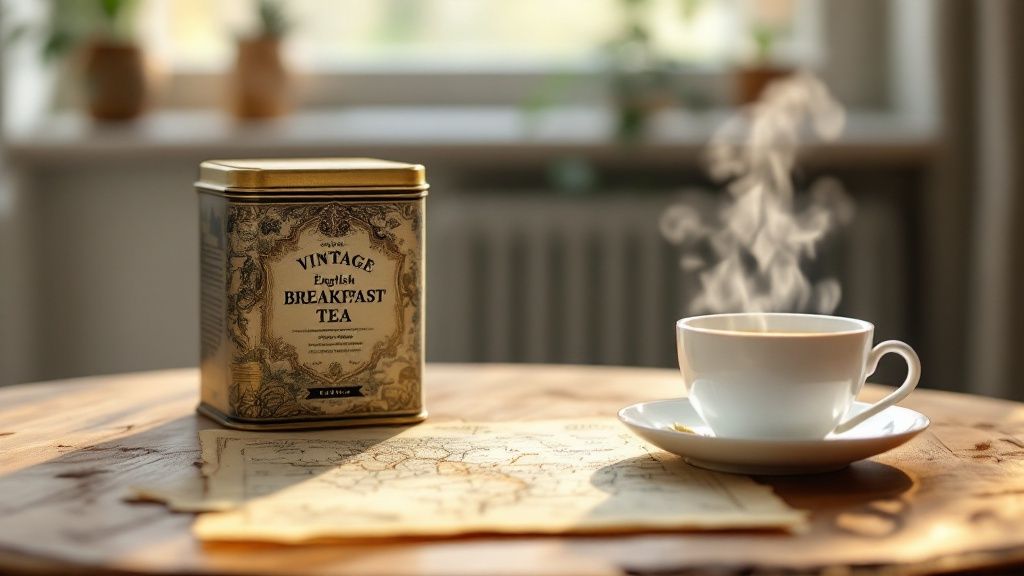
Imagine a drink robust enough to stand up to the savory flavors of a hearty breakfast, yet refined enough to be enjoyed on its own. That's the art of the English Breakfast, a blend designed to deliver the perfect balance of strength and aromatic finesse. Its popularity isn't limited to the UK, it's become an international classic, integrated into morning rituals from New York to Tokyo.
This drink is much more than just a black tea. It's a true moment of sharing, whether it's to kick off a busy day or to treat yourself to a moment of calm.
What makes this tea so special?
Its secret? A unique and expertly orchestrated composition. It's generally a blend of several black teas from different regions of the world, each bringing its own touch to the final profile. It's this combination that gives it its rich and complex character, with notes often described as malty and invigorating.
Its great strength is also its versatility. It pairs wonderfully with a splash of milk, a touch of sugar, or a simple slice of lemon, adapting to everyone's tastes, whether to accompany a croissant in Paris or a pão de queijo in Brazil.
Its fame has spread far beyond the British borders to become a permanent fixture in our daily lives, including in France. This widespread adoption is a testament to its ability to integrate into local rituals and palates. The English Breakfast has evolved while preserving the strong identity that has made it so successful.
The Little-Known Epic of English Breakfast Tea
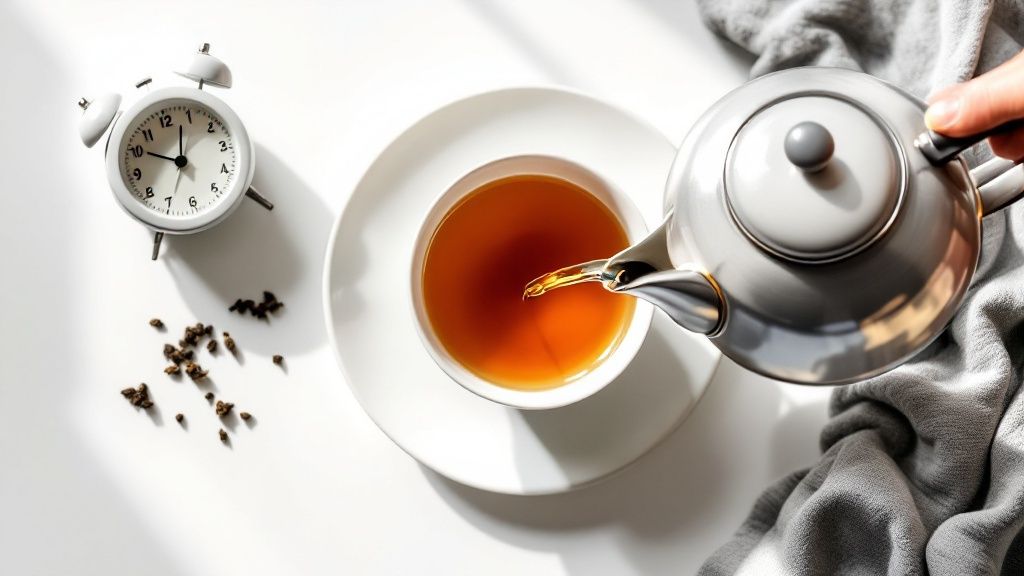
Contrary to what its name might suggest, the English Breakfast Tea adventure did not begin in the hustle and bustle of London, but much further north, in Scotland. It was there, at the beginning of the 19th century, that a Scottish tea master, Robert Drysdale, had the idea of creating a powerful and full-bodied blend. His goal? To create a drink capable of standing up to the legendary and very hearty British breakfast.
In Victorian times, this morning meal, the "full breakfast," was a veritable institution. Sausages, bacon, eggs, mushrooms... a tea with character was needed to balance the richness of these dishes. Drysdale's blend, then modestly named "Breakfast Tea," was the perfect answer.
Its success was initially local, in Edinburgh. But it was a royal visit that would change everything. Queen Victoria, a great lover of Scottish culture, discovered this tea during a stay at Balmoral Castle and fell in love with it. Won over by its rich and invigorating flavor, she brought a generous supply back to London.
The rise of a British classic
Once introduced at court, Scottish Breakfast Tea immediately won over the English aristocracy. Sensing a good deal, London tea merchants rushed to create their own versions. To embrace this new trend, they simply added the prefix "English."
This is how English Breakfast Tea was born: not through an original creation, but through adoption and a brilliant marketing ploy. It was an immediate success, and it became the morning tea par excellence throughout the kingdom.
The great tea houses of the time, of course, played a major role in its popularization. They perfected the blends using leaves from the new plantations of the British Empire, including:
- Assam (India): derived from the tea plant Camellia sinensis var. assamica , this variety gives a malty flavor, robustness and a dark color.
- Ceylon (Sri Lanka): for its liveliness, citrus notes and freshness, from tea plants grown at high altitudes.
- Kenya: sometimes added for its intense copper color and strong character, often grown using the CTC (Crush, Tear, Curl) method for a quick and strong infusion.
"The story of English Breakfast Tea shows us how a local invention can become a global phenomenon through cultural influence and trade."
The rise of maritime trade routes then allowed this blend to conquer the world. Tea, once a luxury, became accessible to all, and the English Breakfast established itself as a true standard of taste and quality.
A constantly evolving composition
The exact recipe for the English Breakfast has never been set in stone and doesn't really exist. It has always evolved according to available teas and current tastes. While early blends were dominated by black teas from China (such as Keemun), the expansion of the Empire quickly brought teas from India and Sri Lanka to the forefront.
This flexibility is undoubtedly one of the keys to its longevity. Each tea house jealously guards its secret recipe, adjusting the proportions to find the perfect balance between strength, aroma, and color. This is why an English Breakfast can taste slightly different from one brand to another, while still retaining its unique soul.
At Tea Tribes, we love it Robust and full-bodied, on its own or English-style with milk and sugar. Our English Breakfast is a blend combining Ceylon black tea, for its rich and powerful taste, and Assam black tea for body and roundness.

Our English Breakfast is a premium blend and is also certified organic. Enjoy!
Today, it's one of the most popular teas in the world, a true cultural icon that has endured through the ages. Its history, from a small Scottish shop to the English royal court, proves that a good idea, when served well, can travel the world.
Decoding the flavors of this iconic blend
What gives English Breakfast tea its familiar, comforting taste? Its magic doesn't come from a single tea leaf, but from the subtle art of blending. Imagine a great chef meticulously combining ingredients to create a signature dish: it's exactly the same principle.
It's not a tea, it's a recipe. A true symphony where each black tea plays its own part to achieve a perfect balance, a cup that is both powerful and harmonious.
To truly understand its character, one must look at the two grands crus that form the heart of this classic blend.
The pillars of English Breakfast
Although each tea house jealously guards its proportions, most quality blends are based on a combination of three distinct origins. Each brings its own unique touch.
-
Assam tea from India: this is the backbone, the quiet strength of the blend. Grown in northeast India, Assam comes from the Camellia sinensis var. assamica plant, a broad-leaf variety that thrives in this monsoon climate. It is renowned for its malty, rich, and full-bodied flavor. It gives the tea its depth, strength, and beautiful dark amber color.
-
Ceylon tea from Sri Lanka: this is the spark of life! Coming from the Sri Lankan highlands like Nuwara Eliya, Ceylon brings a lively, almost lemony freshness. It counterbalances the roundness of Assam with a sparkling note that leaves the palate clean and refreshed.
-
Kenyan tea: it's not always present but can add a touch of character to the blend. Kenyan teas, often from hardy cultivars, are known for their vibrant copper color and bold flavor. They complement the overall blend by strengthening the body of the tea.
At Tea Tribes, our English Breakfast is made with 100% Assam black tea and Ceylon black tea. These two premium teas create a flavor combination that we find sufficiently robust, without needing to be over-enhanced.

The delicate art of assembly
The true talent of the tea master is knowing how to juggle these different origins to create a consistent and balanced taste, cup after cup. Changing the proportion of one or the other can completely transform the experience.
"Blending English Breakfast isn't a science, it's an art. It's about finding that perfect point of harmony between the malty strength of Assam and the freshness of Ceylon to create a cup that's both invigorating and comforting."
A more generous blend of Assam will be fuller-bodied, almost chocolatey, ideal for those who like their tea with milk and sugar. Conversely, if Ceylon dominates, the tea will be lighter and tangy, perfect for enjoying straight.
The next time you enjoy a cup of English Breakfast Tea, take a moment to try to detect these different nuances. Look for the roundness of Assam, the slight hint of acidity of Ceylon, and perhaps the punchy character of Kenya.
The Unsuspected Benefits of English Breakfast
Much more than just a morning comfort, English Breakfast is a drink that hides its game well. Behind its robust and familiar flavor lies a treasure trove of benefits.
Drinking this tea is a bit like donning invisible armor. It's packed with antioxidants, including polyphenols like theaflavins and thearubigins, which are formed during the oxidation of tea leaves. These molecules act as guardians for our cells, protecting them from free radical damage.
At the heart of this protective action are flavonoids, a family of antioxidants particularly abundant in black tea. Science is very interested in their positive impact on our cardiovascular health and their positive impact on our intestinal microbiota. Incorporating regular consumption of black tea can therefore be part of a preventative approach.
A gentler energy for the mind
One of the most well-known benefits of English Breakfast is, of course, its energizing effect. It's the perfect companion for starting the day with a clear and alert mind.
This energy comes from theine, which is the same molecule as caffeine. It acts on our nervous system to chase away fatigue and sharpen our concentration. This is why this tea is so popular in the morning: it sets the stage for the challenges of the day.
But the real magic of tea, what sets it apart from coffee, is the presence of an amino acid called L-theanine. This is where its secret lies. L-theanine has the particularity of promoting a state of relaxation and calm.
"The combination of theine and L-theanine is simply remarkable. It creates what is called 'calm alertness': the mind is alert thanks to the theine, while the body remains relaxed thanks to the L-theanine. It's the perfect balance for being productive, without the stress that goes with it."
This unique synergy explains why tea provides a more diffuse and lasting energy, far from the sudden energy spike (and subsequent crash) often associated with coffee. It's a stimulation that gently supports the mind.
Integrate into a healthy lifestyle
English Breakfast Tea can be a real everyday ally:
- The alternative to coffee: for those who have difficulty tolerating the sometimes abrupt effects of coffee, it offers a more stable and often better tolerated energy boost.
- Hydrate with pleasure: consumed without sugar, tea contributes to our daily hydration while adding a touch of flavor.
- A soothing ritual: the simple act of preparing and enjoying your cup of tea can become a precious break, a real moment for yourself that helps you disconnect.

The art of a perfect infusion
Making a cup of English Breakfast may seem like a breeze, but a few details can transform your experience. No need for sophisticated equipment, just a good grasp of four pillars: water quality, temperature, leaf dosage, and brewing time. By playing with these elements, you become the conductor of the flavors in your cup.
The Foundations of a Successful Infusion
Let's start with the essentials: water. It represents more than 98% of your drink, so its role is far from anecdotal. Water that is too hard, loaded with limescale and minerals, will tend to flatten the flavors, making the tea a little dull.
To allow the flavors to fully express themselves, it's ideal to opt for spring water or softer filtered water. It's the perfect backdrop for the tea's notes to shine through unhindered.
Next, temperature. Black tea, and English Breakfast in particular, needs a bit of heat to release its full complexity. Aim for simmering water, around 95°C. Water at full rolling boil (100°C) risks "burning" the leaves and developing an overly bitter taste. Conversely, water that's not hot enough won't extract the full depth of aromas.
Dosage and time: the key to balance
The dosage is a matter of taste, but a good starting point is 2 to 3 grams of tea (about a heaped teaspoon) per 200 ml of water. If you like your tea strong, don't extend the brewing time; simply add a few more leaves.
The brewing time is where you really shape the character of your tea. It's the crucial moment when you decide on its strength.
- Light and subtle: a quick infusion of 3 minutes will bring out the lively, fresh notes of Ceylon, without extracting too much of the tannins, but it could give you a tea that is too light.
- Classic balance: 4 minutes is the happy medium, offering a pleasant body and well-developed aromas. This is the benchmark length for many.
- Strong and robust: steep for up to 5 minutes. This is the perfect choice if you plan to add a splash of milk, as the tea's strength won't be overpowered.
"A little tip: exceeding 5 minutes is rarely a good idea. Rather than gaining flavor, you risk developing an unpleasant bitterness. For more intensity, it's better to play with the quantity of tea."
Personalize your ritual
Once your tea is brewed, the final step is to decide how you're going to enjoy it. In the UK, milk is almost a must. It softens the natural astringency of black tea to create a smooth and comforting drink. The purist's tip? Pour a splash of cold milk into the cup before adding the hot tea.
Sugar or honey, on the other hand, enhances the malty notes of Assam and balances the slight bitterness. In Türkiye, for example, a similar strong black tea is often served very sweet in small glasses.
Finally, lemon offers a vibrant alternative. A few drops are enough to accentuate the liveliness of Ceylon, for a lighter, tangy result. But be careful, the acidity of lemon and milk don't mix well (it can curdle!). So you'll have to choose your side. Don't hesitate to experiment to find the combination that delights you the most.

Some frequently asked questions about English Breakfast
We're often asked the same questions about this classic. Here are some answers to shed light on the remaining mysteries of the English Breakfast.
English Breakfast or Earl Grey, what's the difference?
The big difference is the flavoring. English Breakfast is a pure blend of several black teas, often from Assam and Ceylon, chosen for their full-bodied character and richness. The taste is straightforward, malty, and unadorned.
Earl Grey also starts with a black tea base, but bergamot essential oil is systematically added. It's this citrus fruit that gives it its distinctive floral and lemony notes. To put it simply: one is a real powerhouse, the other is a fragrant dandy.
Can you drink English Breakfast in the evening?
Of course, but keep in mind its caffeine content. For some of us, a late-day boost can easily disrupt sleep, while for others it won't have any impact.
If you are sensitive to its effects but love its taste, you can use the trick of drastically reducing the infusion time to extract much less theine.
"Caffeine sensitivity is a very personal matter. Some people will drink an English Breakfast after dinner without batting an eyelid, while others will have to stop after 4 p.m. The best advice? Listen to your body."
Should you always add milk?
Absolutely not! It's primarily a matter of taste and tradition. The British custom of adding a splash of milk originated to soften the strength and bitterness of black tea brewed the English way, which is to say, quite strong.
That said, many tea lovers prefer it plain to truly capture all its subtleties. Others add a slice of lemon for freshness or a spoonful of honey for sweetness. Feel free to experiment, there's no tea police!
Is English Breakfast stronger than coffee?
It all depends on what you call "strong." When it comes to caffeine, coffee wins hands down. A cup of English Breakfast contains an average of 40 to 70 milligrams of theine. On the other hand, filter coffee can easily reach 95 to 200 milligrams.
On the other hand, in the mouth, the tea can be perceived as "strong" because of its tannins. This is what gives it its full-bodied side and this slight astringency that coats the palate.
At Tea Tribes & Co, we believe every cup is an invitation to travel. Explore our rituals and blends inspired by world traditions to find the tea that tells your story. https://teatribesandco.com