

Spiced tea is more than just a hot drink. It's a true sensory experience that combines the strength of tea with the comfort of a blend of captivating aromas. Often called Chai , it has become a symbol of conviviality and hospitality rooted in many cultures around the world.
Dive into the world of spiced tea
Imagine a beverage that instantly warms the body and mind. Each sip is a story, a journey to distant lands and ancestral traditions. This is the promise of spiced tea, an infusion where the power of black tea, often a full-bodied Assam, meets a symphony of carefully selected spices.
In India, street vendors, the famous Chai Wallahs, prepare it at all hours, creating a unique and powerful social bond. In the Middle East, a creamier version, Karak Chai, is served as a sign of welcome, a gesture that cannot be refused.

A crossroads of flavors and cultures
The secret to its success? A perfect balance between its components. Each ingredient has a very specific role, providing not only its taste, but also its benefits recognized in traditional medicines like Ayurveda.
- Black tea: this provides the base, a robust and slightly bitter backdrop against which the spices can fully express themselves. Assam from India is a classic choice for its strength.
- Warm spices: Ceylon cinnamon, ginger, cloves and chili pepper are there to bring that characteristic comforting and stimulating warmth.
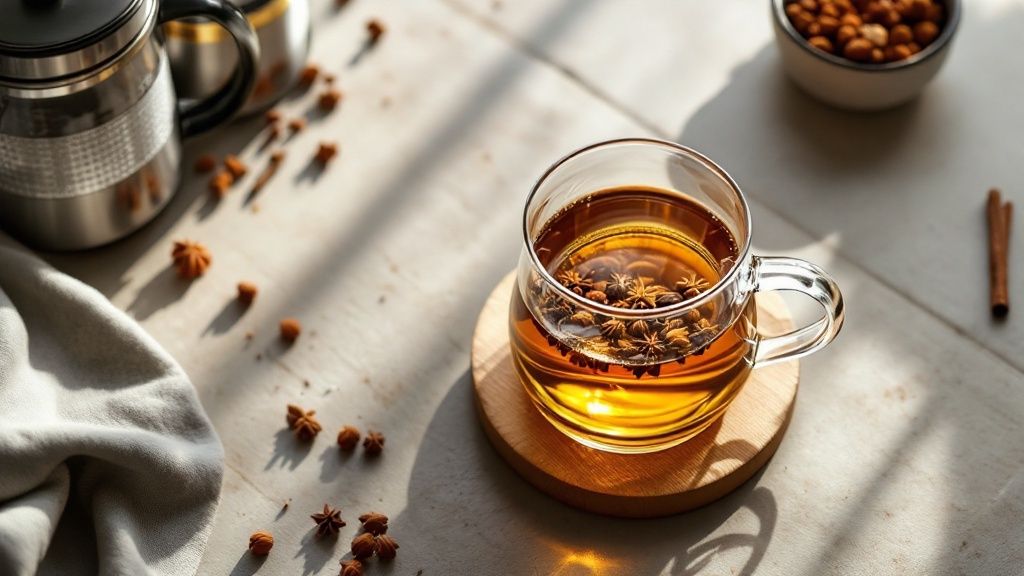
- Aromatic spices: green cardamom from Kerala, star anise, turmeric and black pepper add fragrant notes and a surprising depth that tickles the taste buds.
"Tea or spiced infusion is an invitation to travel. Each culture has made it its own, creating an infinite number of variations that tell its story and its terroir."
It's this cultural fusion that makes each cup so unique. From family recipes passed down through generations to modern creations, spiced tea is constantly reinventing itself.
The origins of spiced tea: a story of remedy and encounter
To truly understand the soul of spiced tea, we must travel far beyond our steaming cups. Its roots lie in the ancient traditions of South Asia, particularly in India, where spices were not mere condiments, but true medicinal treasures.

The story doesn't begin with tea, but with medicine. Imagine India more than 5,000 years ago. Ayurvedic medicine, an ancient holistic health system, already used spice decoctions, the famous kadha. These were spices like ginger, cloves, or cardamom simmered in water, without a single tea leaf. These hot beverages weren't there for pleasure, but to balance the body's energies (doshas) and treat minor everyday ailments, such as a cold or indigestion.
Each spice was carefully selected for its unique properties, creating powerful synergies for health. It was a true natural pharmacopoeia, a wellness ritual accessible to all.
The encounter that changed everything: tea and spices
The major turning point came in the 19th century, when the British introduced black tea cultivation to India. Their goal was simple: to compete with the Chinese monopoly and export it massively. But this new beverage was quickly adopted and transformed by the local population.
Indians took black tea and merged it with their ancestral traditions. They began adding their signature spice blend, masala , and sweetening it with milk and sugar.
"It was from this meeting between East and West that the famous Masala Chai was born. It was no longer a simple Ayurvedic remedy, but a comforting and convivial drink, shared by all social classes."
How Spices Conquered Europe
While chai was becoming an institution in India, Europe was developing a passion for spices. Trade was intense, but the routes were long and controlled by strict monopolies.
- Cinnamon (from Ceylon, present-day Sri Lanka)
- Ginger (from India and China)
- Clove (from the Moluccas Islands, Indonesia)
- Cardamom (from the Malabar Coast, India)
These flavors, now at the heart of our favorite blends, were once rare and precious commodities, transported by the Silk Road or sea routes.
It was thanks to bold individuals that things changed. In the 18th century, a man like Pierre Poivre played a key role in breaking the Dutch monopoly on certain spices. By creating botanical gardens and plantations in the French colonies, he allowed these aromatic treasures to spread more widely throughout Europe.

This newfound accessibility unleashed the creativity of French artisans. They began to experiment, creating unique blends that combined the finesse of tea with the warmth of distant spices. Spiced tea thus became a magnificent cultural crossroads, a drink that tells a story of travel, discovery, and bold fusions.
Spices at the heart of every cup
Think of an orchestra: each instrument plays its part to create a harmonious symphony. Here, it's the same: each spice contributes its unique note, and the result is a complex, comforting drink full of character.
Magic is the delicate balance between flavors that complement and complement each other. It's not just a random blend, but a true composition where the personality of each ingredient is brought to the fore.
At the heart of most traditional recipes are a quintet of essential spices. Each has its own unique flavor profile and benefits that have been recognized for centuries in different cultures.
Visualize the harmony of flavors
To help you better understand the role of each spice and choose your blend, here's a quick summary table. It highlights the characteristics of each key ingredient, giving you the foundation to become a true spice tea artist.
| Spicy | Flavor profile | Main origin | Traditional benefits | Tea Tribes Recipe |
|---|---|---|---|---|
| Cinnamon | Soft, warm, woody | Sri Lanka, Indonesia | Aids digestion, anti-inflammatory properties | SHAKTI |
| Ginger | Spicy, fresh, lemony | India, China | Relieves nausea, stimulates the immune system, digestive comfort | AGNI |
| Turmeric | Earthy, warm, slightly peppery, mild bitterness | India (South), Southeast Asia | Anti-inflammatory and antioxidant, digestive support | TULSIMMUNE |
| Pasilla pepper | Mild to medium, warm, cocoa/raisin notes, slightly smoky | Latin America | Warming | MAYANNA |
| Black pepper | Spicy, dry, woody | India (Malabar Coast) | Facilitates nutrient absorption, digestive aid | TULSIMMUNE |
| Pippali (long pepper, Piper longum) | Warm, woody-resinous, rounder than black pepper | India (Kerala, Assam), Sri Lanka | Dīpana-pācana (stimulates Agni), improves the assimilation of other plants | AGNI |
The Benefits of Spiced Tea: A Heritage of Well-Being
Beyond its comforting warmth, spiced tea is a true invitation to well-being, a drink whose virtues have spanned the ages. Each sip is an encounter between the pleasure of the senses and the power of the plants that compose it.
Inspired by ancient knowledge, such as that of Ayurvedic medicine in India, and validated by modern science, this aromatic beverage is much more than just a drink. It's a true synergy where each spice contributes its stone to support the balance of our body.

A natural ally for digestion
One of the most well-known superpowers of spiced tea is its beneficial effect on the digestive system. It's no coincidence that in India, Ayurvedic medicine places digestion at the heart of health. Everything revolves around a central concept: Agni , our "digestive fire." Imagine an inner flame. When it's bright, it effortlessly transforms food into energy. But if it falters, toxins build up and discomfort sets in.
To fan this flame, Ayurveda turns to spices called dīpana–pācana (which “ignite” and “ripen” digestion), “warming” spices that give a boost to the metabolism.
- Ginger: true champion of digestion, It is said to "light" the digestive fire, preparing the stomach to work well. By stimulating the production of digestive enzymes, it helps our body to better break down and assimilate food, and to fight nausea.
- The Pippali: Rounder and deeper than black pepper, it stimulates Agni without aggression and supports assimilation.
- Garlic: traditional digestive tonic, it helps limit fermentation and heaviness after meals.
This is exactly the logic of our AGNI infusion, a simple and precise blend: ginger (30%), liquorice (24%), garlic powder (18%), pippali (18%), rock salt (10%).
 Handpicked exclusively from India, using locally certified organic ingredients. No added flavoring or sugar.
Powerful anti-inflammatory properties
Chronic inflammation is often at the root of many health problems, The invisible thread behind fatigue, stiffness, or digestive discomfort. Fortunately, nature offers us solutions, and several spices are real anti-inflammatory shields.
"In a spiced drink, the ingredients don't add up, they multiply. Their combined effects create a drink whose benefits far exceed the sum of its parts."
If cinnamon is a great classic of soothing blends, we have chosen, with MAYANNA, another equally effective and delicious path: the cocoa pod as an antioxidant and anti-stress base, the gentle heat of the pasilla pepper for the warming and modulating effect, then pineapple and mango for their roundness.
In Mesoamerican tradition, cacao ("Ka'kau") is a ritual drink: a tonic for warriors, a remedy for herbalists, a symbol of abundance. MAYANNA is part of this heritage with a short and effective recipe: cacao pod (40%), pineapple (30%), mango (15%), pasilla pepper (15%).
 Exclusively from Guatemala: 100% natural, no added flavors or sugar, caffeine-free and lactose-free cocoa drink.
Why does it work?
-
Cocoa pod: rich in polyphenols (flavanols), it helps neutralize oxidative stress that fuels inflammation. Theobromine provides a relaxing tonic, useful for relieving nervous tension that often aggravates inflammatory phenomena.
-
Pasilla pepper: very mild in heat, it provides capsaicinoids with a warming and modulating effect; it is often referred to as an “internal balm” which stimulates microcirculation without burning.
-
Pineapple: natural source of bromelain, an enzyme traditionally used to support inflammatory conditions.
-
Mango: for the sweetness in a cup, because to fight inflammation it needs to be taken regularly, so it is easier if it is pleasant.
“By purchasing pods from Guatemalan artisans, we enhance the fiber- and polyphenol-rich part of the cocoa, while ensuring a clean taste and a clean supply chain.”
A shield for the immune system
As the seasons change, a spiced drink can be a simple and delicious way to give our natural defenses a boost. For centuries, ginger, cinnamon, turmeric (and sometimes cloves) have been associated with increased resistance and a feeling of inner warmth.
This combination of spices, combined with other ingredients, creates a beneficial cocktail that helps the body defend itself against attacks, especially when the seasons change and viruses rear their ugly heads.
Born in the heart of India, the infusion TULSIMMUNE brings together Ayurvedic pillars recognized to accompany the changes of seasons for the "immunity" gesture inspired by Ayurveda: amla (24%), tulsi (15%), guduchi (15%), pippali (10%), cinnamon (10%), licorice (8%), turmeric (6%), ginger (6%), black pepper (6%).

Handpicked exclusively from India – locally certified organic ingredients – no added flavors or sugar – no caffeine.
Other ingredients:
-
Tulsi (holy basil): gentle daily tonic, traditionally associated with natural defenses and mental calming.
-
Amla: fruit very rich in natural vitamin C, polyphenols and tannins; antioxidant support which helps fight against oxidative stress.
-
Guduchi (Tinospora cordifolia): large “rasayana” plant in Ayurveda, sought after for balancing the defenses.
-
Pippali & black pepper: warming peppery notes, piperine is known to improve the assimilation of certain compounds (including those in turmeric).
Bringing gentle energy
In Sanskrit, śakti means life force. Our namesake infusion captures the spirit: an energy that supports clarity without overwhelming the nervous system. It combines warming spices (ginger, cinnamon, cardamom) and adaptogenic plants selected to help the body better manage the stress of everyday life, from the office to gentle exercise.
In Ayurvedic India, we cultivate the idea of an inner force—Shakti, creative energy—that we nourish through breathing, meditation… and certain roots. Among them, shatavari (“she of a hundred husbands” in Sanskrit) is traditionally prized throughout hormonal life: it is drunk to support vitality, libido, and accompany the variations of the cycle. Alongside it, sariva (anantamula) provides a “refreshing” and purifying counterpoint, often recommended to soothe internal heat and support the urinary system. A pinch of cinnamon warms and rounds, licorice softens and prolongs. The result: a woody, gently spiced cup, designed to nourish momentum without overwhelming the body.

SHAKTI, harvested by hand in India, is a unique blend of shatavari root, sariva (or "anantamula") root and stem, licorice root and cinnamon bark. Shatavari, known for its adaptogenic properties, helps balance hormones and boost female energy. Sariva and licorice, in addition to their soothing effects, help reduce menstrual pain. Finally, cinnamon not only adds a warm and spicy flavor but also has anti-inflammatory and antioxidant properties.
Each ingredient plays a specific role, and it's their synergy that creates the perfect balance. With no added flavors or sugars, SHAKTI's ingredients are renowned for providing numerous benefits, including boosting female energy and reducing menstrual pain.
And for pleasure, don't hesitate to enjoy it as a latte: the recipe is here.
Spiced Tea Rituals: A Journey Around the Globe
Much more than just a hot beverage, spiced tea is a universal language. Each culture has appropriated it, transforming it into a unique ritual, a symbol of hospitality, sharing, or even spirituality. A spiced drink can give rise to traditions as rich as they are diverse.
India: Masala Chai, the pulse of daily life
Our journey inevitably begins in India, the undisputed birthplace of Masala Chai. There, it's not just a drink you drink occasionally; it punctuates the lives of millions of people. On every street corner, Chai Wallahs , true tea artisans, prepare their signature brew in huge, steaming pots.
Their recipe, often a family secret, is a spectacle in itself. Black tea simmers for a long time with milk, sugar, and a blend of freshly ground spices. Everything is then poured from a great height, with theatrical gestures, to aerate the liquid and create that creamy foam. Offering a Chai is a welcome, an excuse to take a break and chat. A moment of sharing essential to Indian culture.
Middle East: Karak Chai, a creamy embrace
Moving on to the Middle East, particularly in the Gulf countries, the spiced tea becomes Karak Chai . The word "Karak" means "strong" or "dense," and it fits this tea perfectly. Fuller-bodied and much creamier than its Indian cousin, Karak Chai is often made with unsweetened condensed milk, giving it a velvety texture and incredibly rich flavor.
Here, cardamom reigns supreme, sometimes joined by a touch of saffron, which gives it a golden color and a luxurious aroma. It's the ultimate comfort drink, served in small glasses to warm up on chilly desert nights or to accompany lively discussions with friends.

Each cultural variation of spiced tea tells a story. It reflects the climate, the local ingredients, and the temperament of those who share it. It's a drink that adapts and transforms, but whose soul remains universal.
North America: Yogi Tea, a spiritual inspiration
Across the Atlantic, spiced tea has taken a very different path. Inspired by the teachings of yoga and Ayurveda, Yogi Tea was born in North America in the 1970s. And beware, there's a big difference: unlike Chai, this version is completely devoid of black tea, and therefore caffeine.
It is a pure infusion of spices: cinnamon, cardamom, ginger, cloves, and black pepper. Originally designed as a revitalizing drink for yoga students, it has become a symbol of well-being and healthy living. The ritual that accompanies it is more personal, focused on relaxation, meditation, and the search for inner balance.
FAQ: Everything you need to know about spiced tea
So, our exploration of spiced tea is coming to an end. It's time to lift the last veils of mystery so that every cup you prepare is a pure success. The idea here is simple: to give you clear and practical answers so you feel completely at ease. From small vocabulary subtleties to storing your spices, here's something to perfect your knowledge.
What is the difference between Chai and spiced tea?
This is an excellent question, and confusion is common! Simply put, spiced tea is an umbrella term, a large family that includes all drinks prepared with tea and an assortment of spices.
Masala Chai, often referred to simply as "chai," is actually the Indian version of this tea, and it is by far the most famous in the world. In Hindi, "masala" literally means "mixture of spices."
In other words, while all masala chai is a spiced tea, the reverse is not true. There are countless other recipes across the globe, such as the Middle Eastern Karak Chai, each with its own traditions and unique flavors.
Does spiced tea always contain caffeine?
Well, if you follow the traditional recipe with black tea (often a strong Assam), the drink naturally contains caffeine. The exact dose will, of course, vary depending on the type of tea chosen and the length of the infusion.
But there are a whole host of non-tea versions that are still called spiced tea or spiced infusion. These vary greatly, from a blend of plants and flowers to rooibos with spices.
Is it better to choose recipes with whole or powdered spices?
Well, again, it will depend on the spice in question, but for most people, whole or chopped spices are undoubtedly the best choice. This is the best way to preserve the essential oils that will be released during the infusion. Powder often gives a flatter taste and retains fewer of the molecules with properties.
At Tea Tribes we offer whole spices or in pieces like in Mayanna with pasilla chili, or black pepper in our Ayurvedic recipes.
How do I properly store my spiced recipes?
Proper storage is the key to keeping your spices vibrant. Choose recipes with whole or chopped spices; they stay fresh much longer than ground versions. Then store them in airtight container to protect them from air and moisture. Finally, find a cool, dark spot for them, such as a kitchen cupboard, away from the oven.
At Tea Tribes & Co, we believe that ancient rituals and plants from around the world are an infinite source of well-being. Explore our unique collections inspired by local traditions to discover teas and infusions that will take care of you, day after day at https://teatribesandco.com